
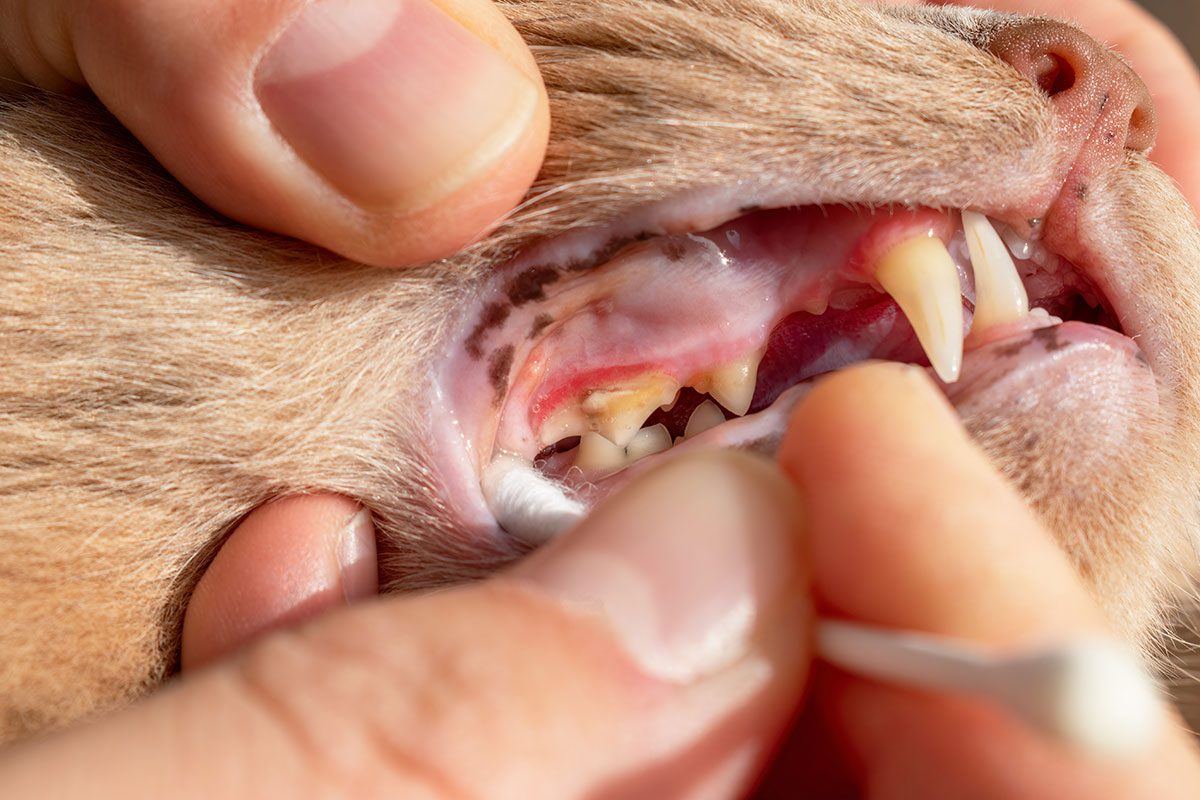
Gingivitis and Periodontal Disease
This common condition occurs when the body’s immune system reacts to bacteria and toxins that build up on the teeth as plaque. Periodontal disease is progressive and can lead to tooth loss, oral pain, infection, bad breath, and even systemic health complications.
Fractured Teeth
Fractured teeth are often caused by chewing on hard objects such as cow hooves, antlers, hard nylon toys, ice cubes, rocks, and marrow bones. When the pulp is exposed, bacteria can enter the tooth and cause infection. We recommend root canal therapy or extraction for these cases, and sometimes a crown may also be advised to restore function.
Discolored Teeth
A discolored tooth typically results from chewing on hard objects or from blunt trauma. When the pulp bleeds, it stains the dentin pink before darkening to purple or grey. Dr. Feigin and Dr. Shope are currently conducting histologic research on discolored teeth to better understand their health and treatment outcomes. At this time, we recommend root canal therapy or extraction for any discolored (even partially discolored) teeth.
Persistent Primary Teeth
When an adult tooth erupts before the baby tooth has fallen out, the two teeth compete for space, often leading to crowding, plaque buildup, and malocclusion (misaligned bite). To prevent complications, we recommend extracting persistent primary teeth as soon as possible.
Stomatitis
Stomatitis is a severe inflammation of the oral cavity, most often seen in cats, caused by an exaggerated immune response to plaque bacteria. The resulting inflammation makes the mouth red, swollen, and extremely painful. While the exact cause is unknown, our team has successfully treated hundreds of cats with this challenging condition.
Feline Tooth Resorption
This painful condition leads to the gradual loss of tooth structure and affects 28% to 67% of cats, making it the most common reason cats lose teeth. Multiple teeth are often affected, and once one lesion is found, others frequently follow. Because these lesions occur below the gumline, dental radiographs are essential for diagnosis and treatment. The exact cause remains unknown.
Carious Lesions (Cavities)
Cavities are uncommon in pets but can occur, particularly on the flat occlusal surfaces of the molars in dogs, appearing brown or black. If the decay is mild, we can restore the tooth with a filling. If the pulp is affected, root canal therapy or extraction is recommended.
Oral Masses
Oral masses may be benign or malignant, and early detection is crucial. We biopsy all suspicious growths and send samples to a pathologist for evaluation. The most common malignant oral tumors we see include squamous cell carcinoma, melanoma, and fibrosarcoma.
Canine Tooth Resorption
Tooth resorption in dogs can occur internally, externally, or both, affecting the crown and/or root of the tooth. Diagnosis relies on dental radiographs, as these lesions are often not visible until the mouth is examined under anesthesia. Affected roots may appear irregular or replaced by bone. Some lesions are painful and require tooth extraction, while others are not.
Jaw Fractures
Jaw fractures can result from trauma or severe bone loss due to periodontal disease. We use cone beam CT and dental radiography to evaluate the injury and plan the most effective repair. Our goal is always to restore normal function and alignment as quickly and safely as possible.
Malocclusion (Abnormal Bite)
Malocclusions may be genetic or caused by trauma, and some are considered normal for certain breeds. Treatment options can include orthodontic movement, selective extractions, or crown shortening with vital pulp therapy. Our primary objective is to establish a comfortable, functional bite for every patient.